

What Is Shade Fabric? Sun Shade Fabric Materials for Architectural & Commercial Projects
Shade fabric is one of the most critical and most misunderstood material decisions in architectural shading, commercial blind systems, and outdoor living projects. Specify the wrong fabric shade material and you're looking at premature degradation, poor heat control, or a product that fails compliance requirements within the first season.
This guide is written for architects, blind manufacturers, project specifiers, and procurement professionals who need to understand how sun shade fabric actually works not just what it looks like in a catalog. We cover material types, technical performance metrics, fire resistance classifications, and how to match the right outdoor shade fabric to the demands of your project.
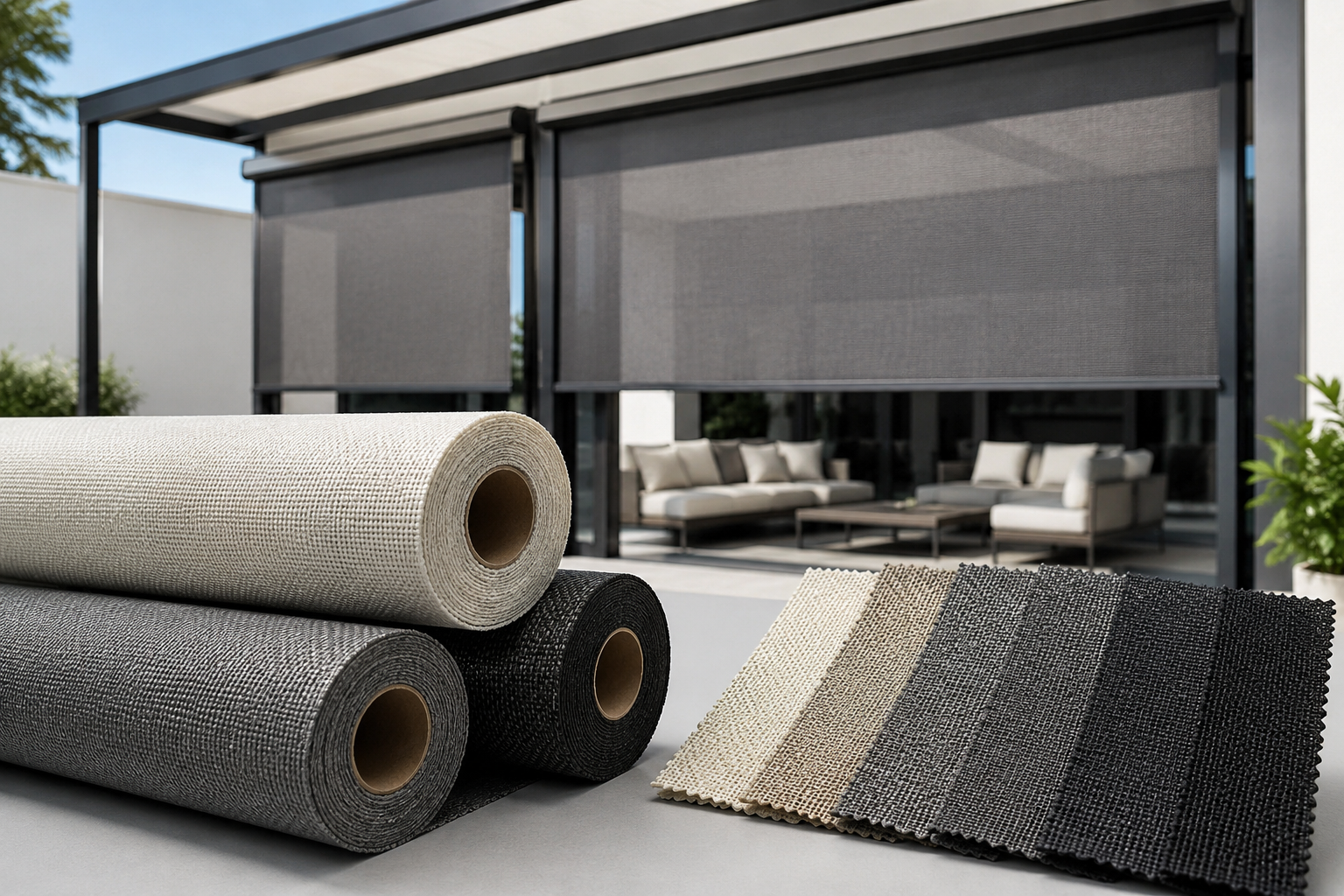
What Is Shade Fabric?
Shade fabric also referred to as sun shade cloth fabric, fabric shade material, or sunscreen material fabric — is a precision-engineered textile designed to regulate solar energy transmission through windows, facades, pergolas, awnings, and other architectural openings.
Unlike conventional decorative textiles, shade fabrics are defined by measurable performance values: openness factor, UV blockage percentage, solar transmittance, solar reflectance, and weight per square meter. These aren't marketing numbers they're specified by designers, tested in laboratories, and certified against international standards.
At its core, every sun shade material performs a balancing act: allowing enough visible light into a space while blocking sufficient solar heat gain to reduce HVAC load and protect interiors from UV degradation.
The Key Performance Metrics You Need to Know
Before choosing any outdoor shade fabric, there are five technical values that define its real-world performance. Every credible manufacturer will provide these figures per colorway not just per product line.
Openness Factor (OF)
The percentage of open area in the weave. A 1% openness fabric blocks more light and offers more privacy than a 10% fabric. Typical commercial shade fabrics range from 1% to 10%. For outdoor applications exposed to wind load, lower openness values also increase structural stress on the system — an important consideration for retractable awning material or roller blind specification.
UV Blockage
The percentage of ultraviolet radiation blocked by the fabric. High-performance shade fabrics achieve 95–99% UV blockage regardless of color. This protects furniture, flooring, artwork, and occupants from long-term UV damage.
Solar Transmittance (TS)
The proportion of total solar energy (heat + light) that passes through the fabric. Lower TS means less heat entering the space directly impacting energy efficiency and occupant comfort.
Solar Reflectance (RS)
The amount of solar energy reflected back by the fabric surface. Lighter-colored fabrics in outdoor shade cloth material applications typically carry higher RS values, which is why white and beige tones are preferred for heat-critical facades in hot climates.
Solar Absorption (AS)
Energy absorbed into the fabric itself. High absorption in dark fabrics can cause the textile to re-radiate heat into the space a critical factor when specifying interior shade fabrics close to glazing.
Visual Transmittance (TV)
The percentage of visible light transmitted. This determines how much natural daylighting is preserved while shading is active a key metric for commercial interiors and LEED-conscious projects.
Types of Shade Fabric: What Are the Main Options?
The outdoor shade fabric and sun shade material market is divided into two primary material technologies, with significant performance differences between them.
1. Fiberglass-Core Shade Fabric (Glass Fiber Reinforced)
Fiberglass shade fabrics use a woven glass fiber yarn as the structural core, coated with PVC. This construction delivers exceptional dimensional stability — the fabric does not stretch, shrink, or sag under heat or tension. For large-format outdoor shade cloth material rolls used in zip-screen systems, motorized roller blinds, or fixed facade shading, this is the benchmark specification.
Key performance characteristics of fiberglass shade cloth:
Near-zero thermal expansion — critical for precision-guided zip screen systems
High UV blockage (~97%) maintained across all colorways
M1 fire resistance (NF P92-503) and FR NFPA 701 certification — suitable for commercial and hospitality specifications
Available in widths up to 320cm to minimize seam requirements on large-format installations
Thickness typically 0.70–0.75mm with weights around 540–560 g/m²
The composition matters: a 70% PVC / 30% fiberglass formulation behaves differently from 65% PVC / 35% fiberglass in terms of drape, rollability, and long-term fatigue resistance. Higher glass fiber content generally means a stiffer hand and better dimensional stability, which is preferred for large-format sun shade fabric roll applications.
Color selection also drives performance. A white-beige fiberglass fabric shade material might deliver Solar Reflectance of 58 and Solar Absorption of only 13 making it ideal for heat-exposed south-facing facades. A charcoal grey option of the same fabric type may show Absorption of 76 excellent for glare control and external view-through but generating more radiated heat.
Typical applications: Architectural zip screens, motorized roller blind systems, hospitality pergola shading, commercial facade sun control, healthcare and educational interiors.
2. PVC-Coated Polyester Shade Fabric
PVC/polyester construction uses a polyester yarn base coated with PVC. This is the workhorse of the roller blind industry more flexible and easier to handle than fiberglass, with a softer drape that suits both indoor and outdoor installations where dimensional rigidity is less critical.
For patio shade material in residential applications, or fabric shade cloth used in smaller-format manual blinds, PVC/poly is the more practical and cost accessible choice. It also offers a broader range of color options and textures.
However, for large format retractable awning material or facade-integrated systems where precise dimensional control is essential, fiberglass-core fabrics are the technically superior specification.
3. Mesh and Open-Weave Outdoor Shade Fabric
Mesh-structured shade fabrics offer higher openness factors (typically 5–10%) and are engineered for applications where air circulation is as important as solar control. Used widely in pergola shading, outdoor lounge areas, and commercial terraces, outdoor shade cloth material in mesh construction balances privacy, airflow, and view-through.
Shade Fabric for Outdoor vs. Indoor Applications
This distinction is frequently overlooked in procurement, particularly when a single supplier provides fabric shade material for mixed-use projects.
Outdoor shade fabric must withstand UV degradation, rain, wind load, humidity cycling, and temperature extremes. The PVC coating integrity — measured against accelerated weathering standards determines long-term color stability and tensile retention. A sun shade cloth fabric used externally needs to resist hydrolysis (PVC breakdown caused by moisture and UV combined), which is why outdoor-grade fabric specifications differ from interior-grade products even if they look visually identical.
Indoor shade fabric is optimized for solar heat control through glazing, glare management, and visual comfort rather than weather resistance. The performance conversation shifts toward Solar Transmittance and Visual Transmittance values, SHGC (Solar Heat Gain Coefficient) interaction with the glazing system, and aesthetics.
For commercial and hospitality projects, fire classification is non-negotiable in either context. Look for M1 (French NF standard) or equivalent certifications when specifying any fabric shade material for public spaces.
How to Read a Shade Fabric Technical Data Sheet
A sun shade material data sheet from any credible manufacturer should contain the following if it doesn't, ask for it before specifying:
| Parameter | What to Look For |
|---|---|
| Composition | Fiber type and PVC/fiber ratio |
| Openness Factor | Listed as % per colorway |
| UV Blockage | Should be ≥95% for quality product |
| TS / RS / AS / TV | Listed per colorway, not just per product |
| Weight (g/m²) | Affects system load calculations |
| Thickness (mm) | Affects roller diameter and cassette sizing |
| Fire Classification | M1, NFPA 701, or equivalent |
| Available Widths | Critical for large-format projects |
| Standard Pack Length | Relevant for project quantity planning |
Openness Factor Selection Guide by Application
Choosing the right openness for your outdoor shade fabric or patio shade material is a function of the project's primary performance objective:
1–3% Openness — Maximum privacy and solar control. Suitable for bedrooms, healthcare facilities, hospitality interiors where view-in from outside must be eliminated. Low TV values mean less natural light penetration.
3–5% Openness — The most widely specified range for commercial roller blind and zip screen systems. Balances solar heat rejection, glare control, and maintained outward view. Standard specification for office facades, hotel rooms, and retail environments.
5–10% Openness — Higher transparency, more natural daylight, better view-through. Preferred for sunrooms, restaurant terraces, and outdoor shade cloth material in pergola applications where connection to the outdoors is part of the design intent.
Fire Resistance: Why It Matters for Commercial Specifications
Any fabric shade cloth or sun shade material used in a commercial, hospitality, healthcare, or public building project should carry independent fire resistance certification. The two most referenced standards globally are:
M1 (NF P92-503): The French standard widely referenced across European specifications. M1 indicates the fabric is flame-retardant and will not sustain combustion when the ignition source is removed.
FR NFPA 701: The US National Fire Protection Association standard, required for commercial applications across North American markets and increasingly referenced in international projects.
When a shade fabric carries both certifications, it meets the broadest possible commercial specification requirement — critical for global procurement programs or multi-market projects.
What to Ask a Shade Fabric Supplier Before Ordering
For B2B procurement — whether you're a blind manufacturer, interior contractor, or project specifier — the following questions separate credible suppliers from commodity distributors:
Can you provide solar performance data (TS/RS/AS/TV) per colorway, not just per product? Color dramatically affects thermal performance. Generic product-level data is insufficient for precise specification.
What fire certifications does the fabric carry, and can you provide test documentation? Not certifications listed on a website — actual test certificates from an independent laboratory.
What are your available widths, and how do you handle large-format orders to minimize seam placement? For architectural zip screens and motorized systems, seam placement is both a structural and aesthetic specification.
What is the dimensional stability of the fabric under thermal cycling? Critical for zip-guided systems where fabric tracking must remain consistent across temperature ranges from -10°C to +60°C or more.
What is your standard pack length and minimum order quantity? Relevant for project-specific procurement where roll length must align with installation requirements.
TepText Shade Fabrics: Technical Portfolio Overview
TepText develops and supplies high-performance shade fabric materials engineered for architectural shading systems, outdoor living environments, and commercial blind manufacturing. The product portfolio spans fiberglass-core and PVC/polyester shade fabrics, with specific series developed for outdoor and indoor applications.
Fiberglass Sunscreen (Outdoor): Available in two series with 5% openness factor, ~97% UV blockage, and M1 / NFPA 701 dual fire certification. Widths up to 320cm. Solar performance data provided per colorway across six standard color options from white-beige to black.
PVC/Poly Sunscreen (Indoor): PVC-coated polyester construction for interior roller blind and solar shading applications. Combines manufacturing flexibility with proven solar control performance.
Mesh Series (M32 / M36): Open-weave outdoor shade cloth material engineered for pergola, terrace, and external shading systems where airflow and higher openness factors are specified.
Fiberglass Blackout (Outdoor): Full blackout solution for outdoor motorized systems where total light exclusion is required — hospitality room darkening, home theater applications, or sleeping area sun control.
For technical data sheets, sample requests, or project-specific consultation, contact TepText directly at info@teptext.com.
Frequently Asked Questions
What is the difference between shade fabric and sunscreen fabric?
The terms are used interchangeably across the industry. Both refer to the same category of open-weave textile engineered for solar control. "Sunscreen fabric" or "sunscreen material fabric" tends to be used more in the roller blind manufacturing context, while "shade fabric" or "sun shade cloth" is more common in outdoor living and architectural applications.
What is a sun shade fabric roll, and what lengths are standard?
A sun shade fabric roll is the standard format in which shade textiles are supplied to manufacturers and installers. Standard pack lengths vary by supplier — common roll lengths are 30 meters for technical-grade fabrics. Width options typically range from 250cm to 320cm depending on the product series.
Is waterproof shade cloth fabric different from standard outdoor shade fabric?
Outdoor shade fabrics with very low or zero openness factors are effectively waterproof, as the closed PVC coating prevents water penetration. Open-weave mesh fabrics with higher openness factors will allow some water passage. For applications requiring both shade and rain protection — such as retractable awning material — low-OF fiberglass or PVC/poly shade fabrics are the appropriate specification.
Can patio shade material be used in commercial projects?
The same technical textiles used in residential patio shade applications are also used in commercial projects, but the specification requirements differ. Commercial projects require fire certifications (M1, NFPA 701), documented solar performance data, and often compliance with project-specific standards. Always verify certification documentation with the supplier before commercial specification.
What width of outdoor shade cloth material is available for large-format installations?
High-performance fiberglass shade fabrics are available in widths of 250cm, 300cm, and 320cm. These wide widths are engineered specifically to reduce or eliminate seaming requirements in large-format architectural zip screen and motorized roller blind systems.
